

Everything a beginner needs to understand how nails work, what the different parts are called, and how to look after them.
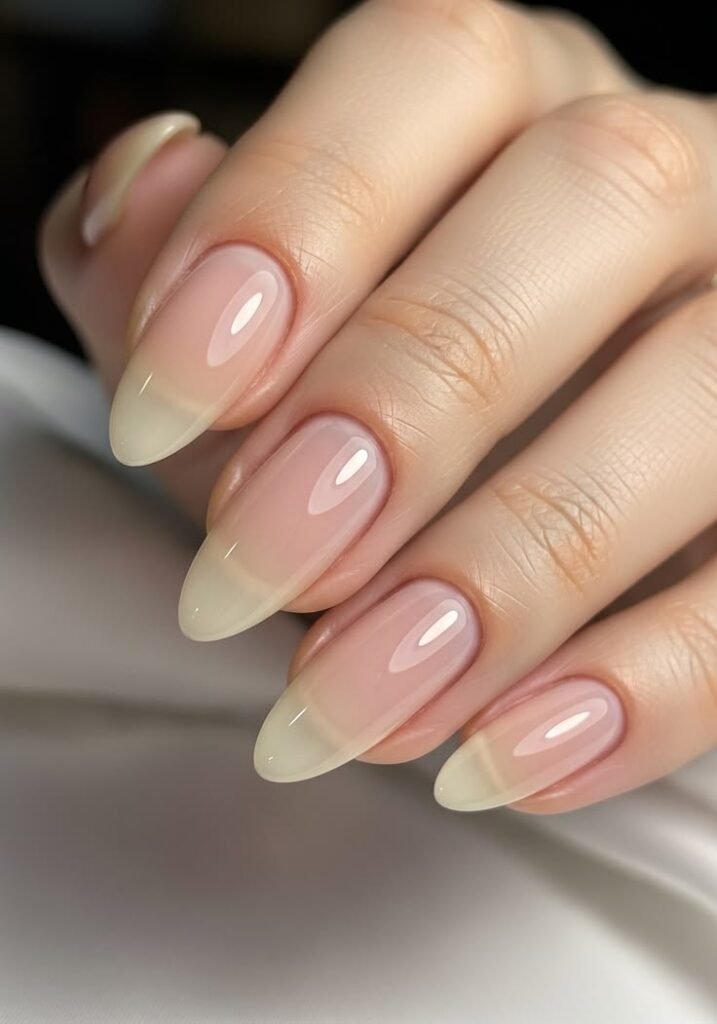
Nails are hard, translucent plates made mostly of keratin that grow from a small area at the base of each finger and toe called the matrix. They protect the sensitive fingertip, support fine motor tasks like picking up small objects, and can be filed, shaped, or polished for style. This introduction to nails covers their basic anatomy, how they grow, the most common nail shapes and lengths, and the everyday care habits that keep them healthy.
Nails don’t get much thought until something goes wrong with them — a snag, a slow-growing chip, or an awkward shape that never seems to file quite right. But nails are doing more work than most people realize, and understanding a little about how they’re built makes it much easier to care for them and to talk about them clearly, whether you’re at a salon or reading up on a new manicure style.
This introduction to nails is meant as a starting point: the basic biology, the vocabulary you’ll see used across nail care and design content, the shapes and lengths people choose from, and the everyday habits that keep nails in good condition. If you’re new to nail care, or just want a clear reference to come back to, this guide covers the fundamentals.
What Are Nails Made Of?
Nails are made primarily of keratin, a tough structural protein that the body also uses to build hair and the outer layer of skin. As new keratin cells are produced, older cells are pushed forward and compressed into the hard, layered plate you see on the surface of the finger or toe.
A nail is naturally translucent rather than white. The pinkish color most people associate with a healthy nail comes from the blood vessels in the skin underneath it, visible through the nail plate.
The Anatomy of a Nail: Understanding Each Part
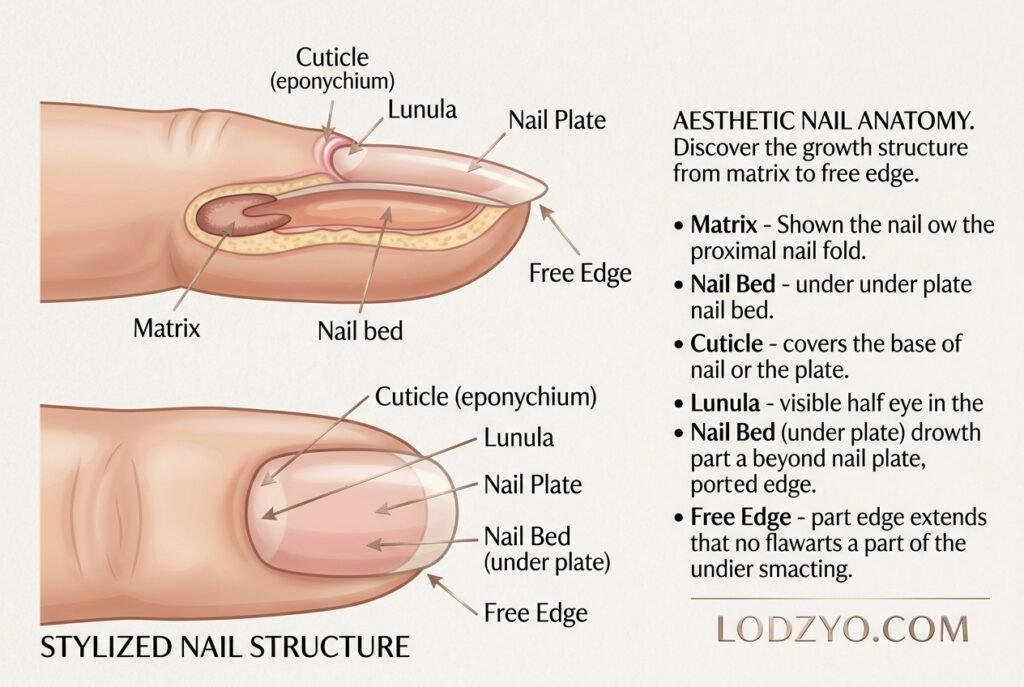
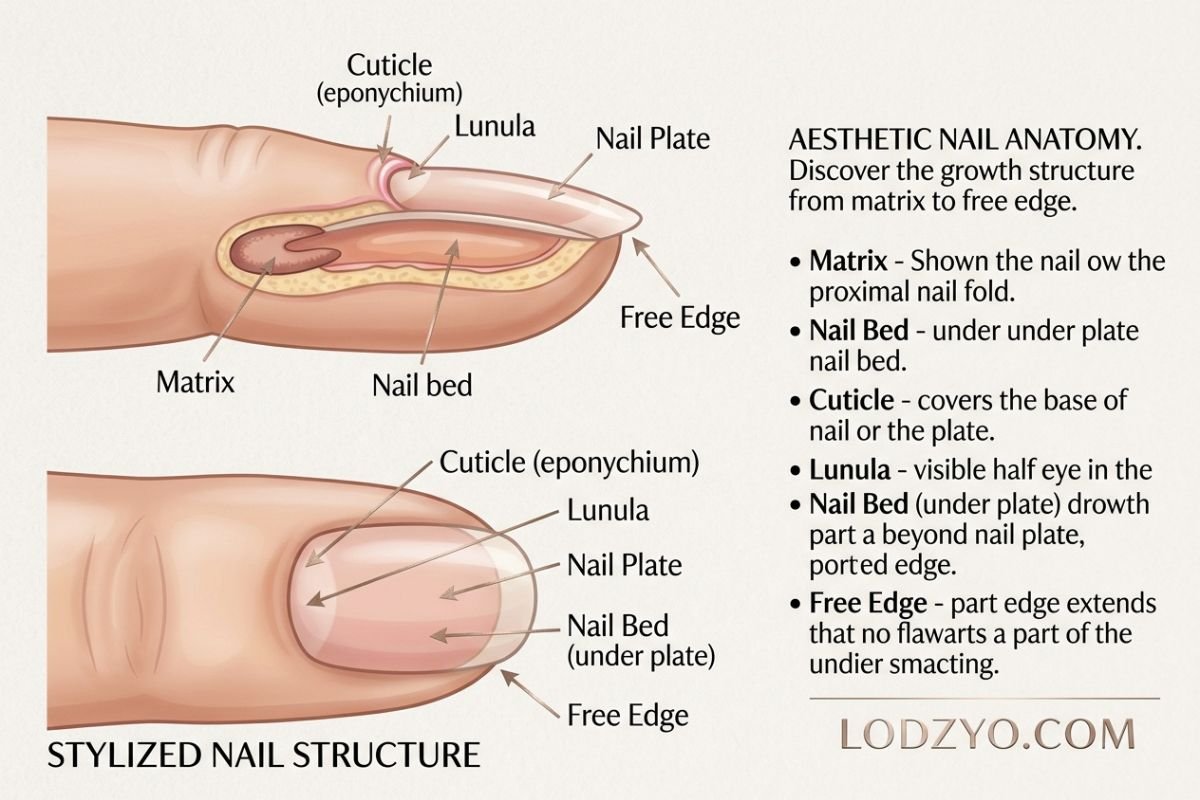
Nail care and nail art content both use a specific vocabulary to describe different parts of the nail. Here’s what each term refers to:
| Part | What It Is |
|---|---|
| Nail plate | The hard, visible part of the nail made of layered keratin. |
| Nail bed | The skin beneath the nail plate that the plate grows over. |
| Matrix | The area under the base of the nail where new nail cells are produced; it determines the nail’s thickness and shape. |
| Cuticle (eponychium) | The thin layer of skin at the base of the nail that seals and protects the matrix from irritants. |
| Lunula | The pale, crescent-shaped area at the base of the nail, sometimes called the “half-moon.” |
| Free edge | The part of the nail that has grown past the fingertip and can be trimmed or filed. |
| Nail folds | The skin along the sides of the nail that holds the plate in place. |
| Hyponychium | The skin beneath the free edge that seals the area under the nail from debris and moisture. |
How Do Nails Grow?
Nails grow continuously from the matrix, with new cells forming and pushing older, hardened cells toward the free edge. Fingernails generally grow faster than toenails, and growth rate can vary from person to person and even from finger to finger — the nail on the middle finger tends to grow fastest, since it’s the longest digit.
Nail growth speed can be influenced by factors like age, overall health, season, and how often the nail is exposed to trauma or trimming, though everyone’s rate is a little different. Because growth happens slowly and starts beneath the skin, visible improvement or regrowth after damage typically takes several months.
Common Nail Shapes Explained
“Nail shape” refers to how the free edge is filed. The main shapes used in manicures are:
- Square: A flat free edge with sharp corners, giving a structured, uniform look.
- Round: A softly curved free edge that follows the natural curve of the fingertip.
- Oval: A rounded, elongated shape with a narrower tip than round nails.
- Squoval: A square shape with softened corners, combining structure with a gentler edge.
- Almond: A tapered shape with a rounded point, similar to an almond nut.
- Coffin (ballerina): A long, tapered shape with a flat tip, named for its resemblance to a coffin or ballet slipper.
- Stiletto: A long, dramatically tapered shape that comes to a sharp point.
Nail shape is largely a matter of personal preference and lifestyle, though nail bed width and finger length can make certain shapes easier or harder to maintain. For shape-specific inspiration, see nail designs and nail art ideas on Lodzyo.
Common Nail Lengths
- Short: At or just past the fingertip; low-maintenance and practical for daily tasks.
- Medium: A few millimeters past the fingertip; a balance between practicality and room for nail art.
- Long: Noticeably extending past the fingertip, often requiring extensions or careful growth; gives the most surface area for detailed designs.
Manicure vs. Pedicure: What’s the Difference?
Both treatments follow a similar process — shaping, cuticle care, buffing, and polish or treatment — but they’re performed on different parts of the body and address different needs.
| Manicure | Pedicure | |
|---|---|---|
| Focus area | Hands and fingernails | Feet and toenails |
| Typical steps | Shaping, cuticle care, hand massage, polish | Soaking, callus care, shaping, foot massage, polish |
| Common goal | Neat, styled hands | Foot comfort and neat, styled toenails |
Nail Care Fundamentals for Beginners
- File in one direction. Filing back and forth can weaken the nail’s layers and lead to peeling.
- Keep cuticles moisturized. A cuticle oil or balm helps prevent dryness and hangnails.
- Trim rather than pick or bite. Using clippers or a file on damaged or torn nails reduces the risk of tearing further.
- Give nails a break between treatments. Alternating periods without gel or acrylic can help nails recover.
- Protect nails from harsh chemicals. Wearing gloves for cleaning or dishwashing helps prevent dryness and brittleness.
- Use a base coat. It helps protect the nail plate from staining and helps polish last longer.
Common Nail Care Mistakes to Avoid
- Cutting cuticles too aggressively, which can remove a protective barrier and lead to irritation.
- Filing nails immediately after a bath or shower, when they’re softest and more prone to splitting.
- Skipping a base coat, which can leave nails more vulnerable to staining and polish that lifts early.
- Using metal tools to pry off gel or acrylic instead of having it removed properly, which can thin the natural nail.
- Ignoring ongoing changes in nail texture, color, or shape, which are worth mentioning to a doctor or dermatologist rather than covering up.
A Simple Nail Care Glossary
A quick reference for terms that come up often in nail care and nail art content:BuffingSmoothing the surface of the nail plate to even out ridges and add natural shine.Base coatA clear protective layer applied before polish to help it adhere and last longer.Top coatA clear finishing layer applied over polish to add shine and protect against chipping.Gel polishA polish cured under UV or LED light that tends to last longer and resist chipping better than regular polish.Acrylic nailsNail extensions made by applying a liquid-and-powder mixture over the natural nail or a tip, then shaping it as it hardens.French tipA manicure style featuring a natural or nude base with a contrasting white (or colored) tip.Negative spaceA nail art technique that leaves part of the natural nail bare as part of the design.
Frequently Asked Questions
What is the white crescent at the base of my nail called?
It’s called the lunula, sometimes referred to as the “half-moon.” It’s part of the matrix showing through the nail plate and is more visible on some fingers, like the thumb, than others.
How fast do nails typically grow?
Growth rate varies by person, but fingernails generally grow faster than toenails, and the middle finger tends to grow the fastest of all the fingers.
Is it bad to cut your cuticles?
Cutting cuticles too aggressively can remove a natural barrier that protects the matrix, which is why many nail professionals recommend gently pushing them back instead of cutting.
What’s the difference between gel and acrylic nails?
Gel polish is a cured coating applied over the natural nail, while acrylics are a liquid-and-powder mixture that can be built up to add length and structure, most often used for extensions.
How often should nails be trimmed?
It depends on individual growth rate and desired length, but trimming or filing every one to two weeks is common for maintaining a consistent shape.
Can a nail’s natural shape be permanently changed?
Filing changes the shape of the free edge, but the width and curve of the nail bed itself is determined by the matrix and generally stays consistent as the nail grows.
Why do nails sometimes look ridged or uneven?
Fine vertical ridges are common and often relate to aging or natural texture, while sudden changes in ridging, color, or thickness are worth discussing with a doctor or dermatologist.
Final Thoughts
This introduction to nails covers the basics — what nails are made of, how they’re structured, how they grow, and the shapes, lengths, and care habits people choose from. With that foundation in place, exploring specific styles, shapes, and trends becomes a lot easier to navigate. Browse nail designs and nail art ideas on Lodzyo to put these basics into practice.Written by Ali Umar for Lodzyo.